
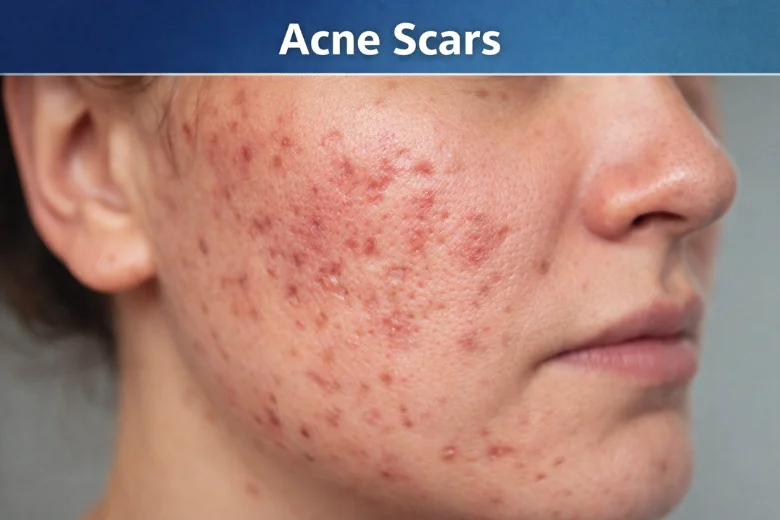
Acne scars are one of the most common dermatological concerns we treat at SkinFix Clinic, Satara. While acne itself can be managed with the right treatment, the scars it leaves behind can persist for years — affecting confidence and self-image long after the breakouts have cleared.
Two of the most popular and effective treatments for acne scars are laser therapy and chemical peels. Patients often ask which one is better. The honest answer is — it depends on your skin type, the type and depth of your scars, and your lifestyle. Let us break down both options.
Understanding Types of Acne Scars
Before choosing a treatment, it is important to understand what type of scars you have:
- Ice pick scars — Deep, narrow, pitted scars that go into the skin
- Boxcar scars — Wide, shallow depressions with defined edges
- Rolling scars — Undulating, wave-like surface caused by fibrous tissue underneath
- Hypertrophic or keloid scars — Raised, thickened scars (less common)
- Post-inflammatory hyperpigmentation (PIH) — Dark marks left after acne (not true scars)
Each type responds differently to different treatments.
What is Laser Treatment for Acne Scars?
Laser therapy works by delivering controlled energy deep into the skin. At SkinFix Clinic, we use CO2 fractional laser — one of the gold standards for acne scar treatment. The laser removes the outer damaged skin layer and stimulates collagen production underneath, gradually resurfacing the skin.
Laser is best suited for moderate to deep atrophic scars (ice pick, boxcar, rolling), patients with fair to medium skin tone, and those who want more dramatic, longer-lasting results with fewer sessions.
What are Chemical Peels for Acne Scars?
Chemical peels involve applying a controlled acid solution to the skin. This exfoliates the top layers, encourages cell turnover, and fades superficial scars and pigmentation. Common peels used include glycolic acid, salicylic acid, lactic acid, and TCA peels.
Peels work best for mild to moderate superficial scars, post-inflammatory hyperpigmentation (dark marks), oily and acne-prone skin, and those looking for gradual improvement with minimal downtime.
Laser vs Chemical Peel: Quick Comparison
| Feature | Laser (CO2) | Chemical Peel |
|---|---|---|
| Scar depth treated | Moderate to deep | Superficial to mild |
| Sessions needed | 1–3 | 4–8 |
| Downtime | 5–7 days | 1–3 days |
| Results visible | After 4–6 weeks | After 3–4 sessions |
| Best for skin tone | Fair to medium | All skin tones |
| Cost per session | Higher | Lower |
Can You Combine Both?
Yes — and at SkinFix Clinic, we often recommend a combination approach. Laser treats the deeper structural scars while peels manage the surface pigmentation and skin texture between sessions. This combined approach delivers better results than either treatment alone and is tailored to each patient’s skin.
Which One is Right for You?
The best treatment depends on a proper in-person skin assessment. Factors like your skin type, scar depth, medical history, budget, and downtime tolerance all play a role. There is no one-size-fits-all answer.
Dr. Shubhali Pawar at SkinFix Clinic, Satara, will assess your scars and recommend the most effective treatment plan for your skin.
Book Your Skin Assessment